Why You Should Never Bin an Old Mobile Phone
If you're wondering how to dispose of an old mobile phone properly, you're already on the right track. Every year, millions of handsets reach the end of their useful life in the UK, yet a surprising number still end up in household bins, junk drawers, or landfill sites. None of these outcomes is safe, legal, or environmentally responsible.
Mobile phones are classed as Waste Electrical and Electronic Equipment (WEEE) under UK regulations. They contain lithium-ion batteries, lead, mercury, and cadmium—all of which can leach into soil and groundwater if sent to landfill. Lithium-ion batteries are particularly hazardous: when crushed or punctured in a refuse vehicle or at a waste transfer station, they can overheat and ignite, posing a serious fire risk to waste workers and infrastructure.
Equally, phones hold precious metals like gold, silver, palladium, and copper that can be recovered through proper recycling. Extracting these materials from recycled electronics uses far less energy than mining virgin ore, which makes responsible disposal both an environmental and an economic priority.
Legal Obligations in the UK
Under the Waste Electrical and Electronic Equipment Regulations 2013, producers, retailers, and local authorities all share responsibility for ensuring old electronics are collected and treated correctly. As a consumer, you are not permitted to place WEEE items—including mobile phones—into general household waste. Businesses face additional duties under the Hazardous Waste Regulations and may need to keep consignment notes for any electronic equipment they dispose of.
How to Prepare Your Phone Before Disposal
Before you hand over, recycle, sell, or donate any device, it is essential to protect your personal information. Modern smartphones store an enormous amount of sensitive data—banking credentials, passwords, photographs, health records, and private messages. A simple deletion of apps is not enough; you need to follow a thorough process.
Step-by-Step Data Wiping Guide
- Back up everything you want to keep. Transfer photos, contacts, messages, and files to a cloud service (such as iCloud, Google Drive, or OneDrive) or directly to a computer via USB.
- Sign out of every account. This includes your Apple ID or Google account, social media apps, banking apps, email clients, and any two-factor authentication apps. On iPhones, also turn off Find My iPhone.
- Unpair connected devices. If your phone is linked to a smartwatch, Bluetooth headphones, or smart-home devices, unpair them before resetting.
- Encrypt your data (Android). Most modern Android phones are encrypted by default, but on older models you may need to enable encryption manually in Settings > Security before performing the reset. This ensures that any residual data is unreadable after the wipe.
- Perform a full factory reset. On iPhone, go to Settings > General > Transfer or Reset iPhone > Erase All Content and Settings. On Android, go to Settings > System > Reset > Factory Data Reset. Follow the on-screen prompts to confirm.
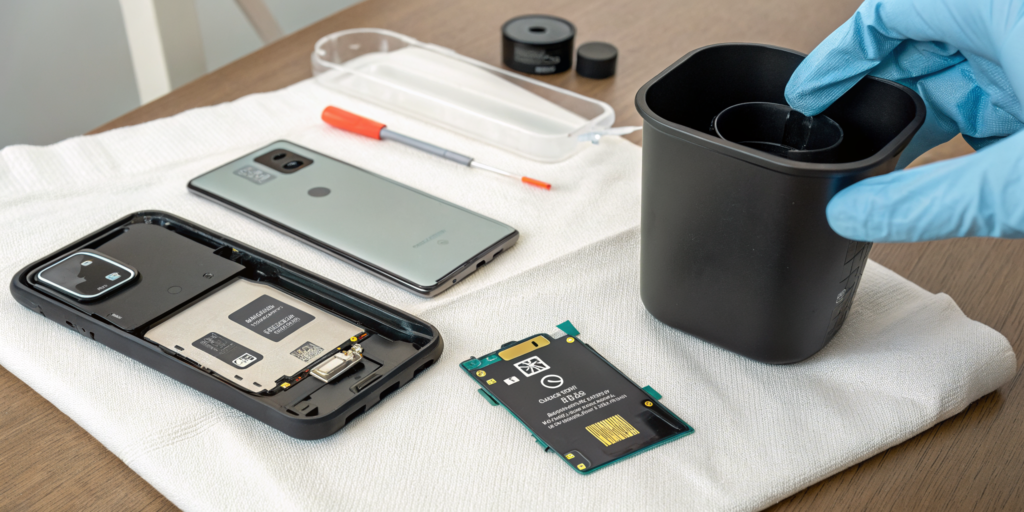
- Remove the SIM card and any memory card. Your SIM card contains your phone number and may store contacts. A microSD card can hold photos, videos, and documents. Keep both or destroy them securely.
If your old phone stored sensitive business data—client records, financial information, or proprietary documents—consider using a professional confidential shredding service that handles electronic media securely and provides a certificate of destruction.
Disposal and Recycling Options
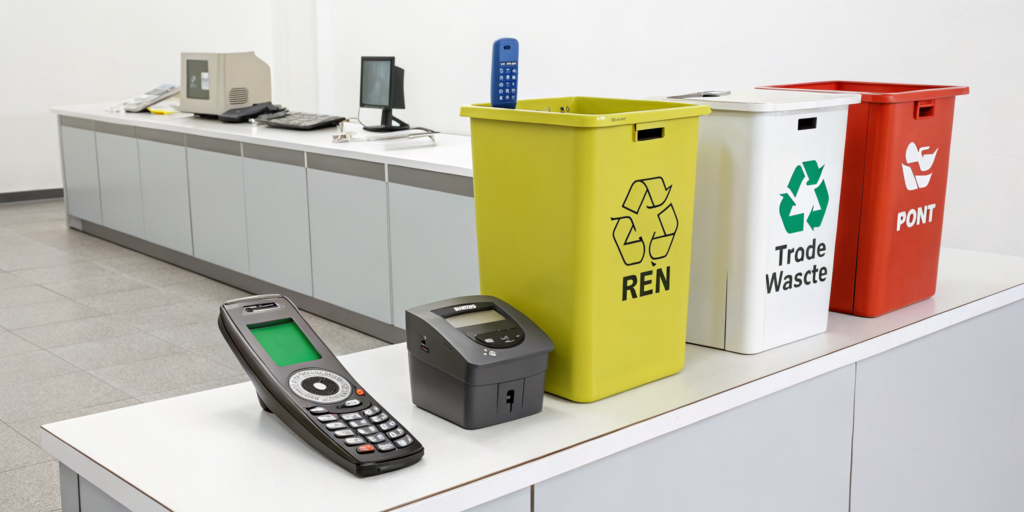
Once your data is wiped, you have several routes for getting rid of your old handset responsibly. The best option depends on whether the phone still works, how many devices you need to dispose of, and whether you'd like to recoup some value. Below is a comparison of the most common methods.
| Disposal Method | Best For | Cost | Data Security | Environmental Benefit |
|---|---|---|---|---|
| Retailer / manufacturer take-back | Individual consumers upgrading a device | Free (may receive trade-in credit) | You wipe beforehand; retailer may also wipe | High – devices refurbished or recycled |
| Local council recycling centre (HWRC) | Individual consumers with broken or very old phones | Free | You wipe beforehand | High – WEEE processed by licensed facilities |
| Trade-in / resale platform | Working phones with residual value | Free (you receive payment) | You wipe beforehand; platform may also wipe | Very high – extends device lifespan |
| Charity donation | Working phones you don't need payment for | Free | You wipe beforehand | Very high – reuse is better than recycling |
| Professional WEEE collection service | Businesses clearing multiple devices | Varies (often included in service contract) | Data destruction certificates provided | High – compliant recycling with full audit trail |
Retailer and Manufacturer Take-Back
Most major UK retailers—including Currys, Apple, Samsung, and network shops such as EE, Vodafone, and O2—accept old handsets in store regardless of brand or condition. Some offer trade-in credit towards a new device, while others simply ensure the phone is recycled properly. Apple's trade-in programme, for example, provides either an Apple Store gift card or an instant discount at checkout, depending on the model and condition of the phone you return.
Local Council Recycling Centres
Your local household waste recycling centre (HWRC) will have a dedicated WEEE container for small electronics. This is one of the simplest options if your phone is too old or damaged to sell. Check your council's website for opening times, booking requirements (many now require advance slots), and any restrictions on the number of items you can bring per visit.
Trade-In and Resale Platforms
If your phone still works, selling it is the most financially rewarding option and the most environmentally beneficial, because it keeps the device in active use. Popular UK trade-in platforms include:
- musicMagpie – offers instant price quotes online, free postage, and next-day bank transfer.
- Envirofone – similar postal trade-in model with competitive pricing.
- CeX – high-street and online option; you can check prices on their website before visiting a store.
- Facebook Marketplace and eBay – private sale options that may yield higher prices but require more effort and carry less buyer/seller protection.
Before selling, compare quotes across at least two or three platforms. Prices can vary significantly depending on the model, storage capacity, cosmetic condition, and whether you have the original box and accessories.
Professional WEEE Collection for Businesses
For businesses clearing multiple devices, a specialist computer and IT equipment disposal service ensures compliant recycling with full audit trails. These services typically collect from your premises, securely destroy all data (often to ADISA or Blancco standards), and provide certificates of destruction and waste transfer notes for your records. This is particularly important for organisations handling personal data under the UK General Data Protection Regulation (UK GDPR), where improper disposal of devices containing personal information could result in enforcement action from the Information Commissioner's Office (ICO).
Donate If It Still Works
A functioning phone can make a genuine difference when donated to the right organisation. This extends the device's useful life, reduces electronic waste, and supports charitable causes. Several UK charities actively collect old smartphones:
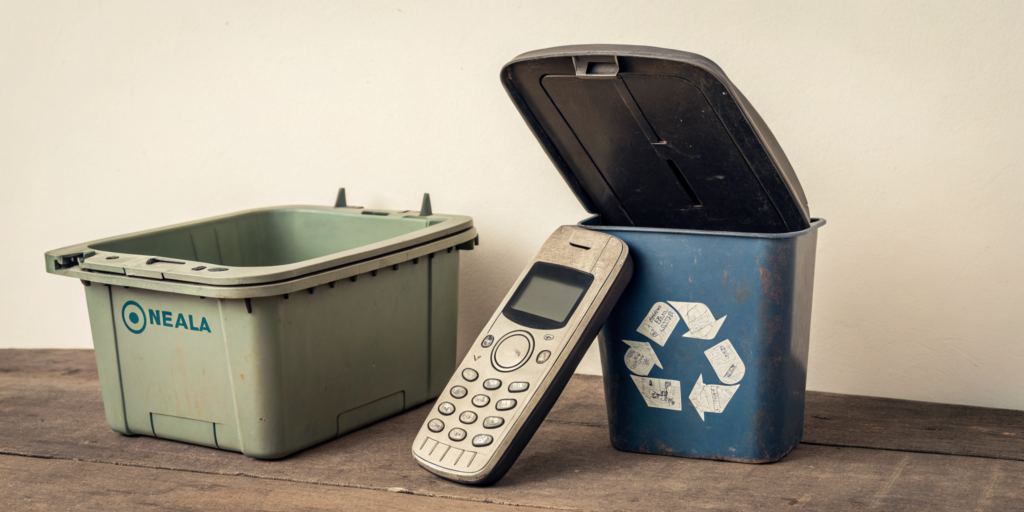
- Oxfam – accepts working smartphones in their shops and through postal donation schemes.
- British Heart Foundation – takes working phones in store and sells them to raise funds.
- The Hygiene Bank and Refuge – some domestic abuse charities distribute phones to vulnerable individuals who need a safe way to contact support services.
- Community organisations – local food banks, refugee support groups, and digital inclusion projects often welcome donated handsets.
Even non-working phones can help: some charities partner with recycling firms and receive a small donation per handset collected, so sending in a broken device still generates funds for good causes.
If you're also clearing other household items alongside old electronics, a house clearance service can handle the lot responsibly, ensuring electronics are separated and sent to the correct recycling streams rather than mixed in with general waste.
What Happens to a Recycled Mobile Phone?
Understanding the recycling process can help reinforce why proper disposal matters. When a phone arrives at a licensed WEEE treatment facility, it goes through several stages:
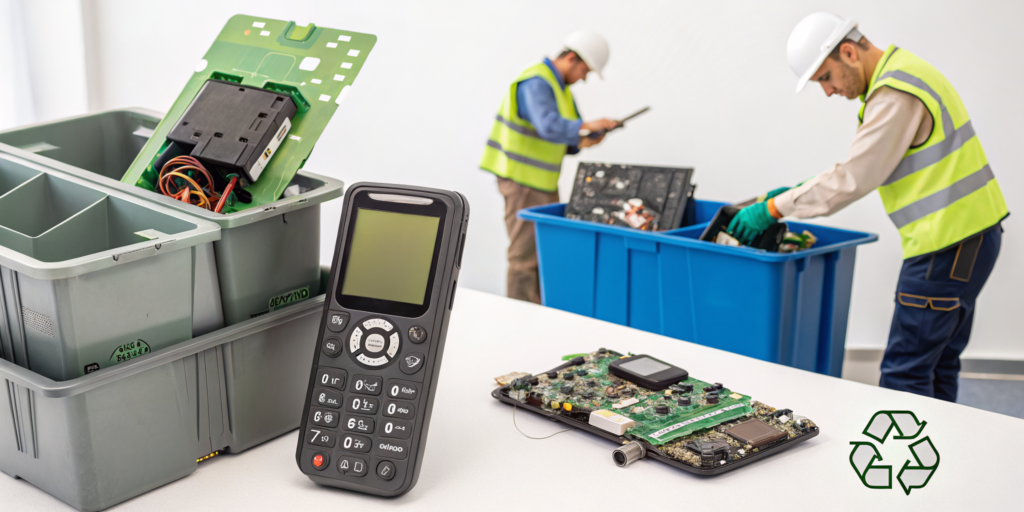
- Assessment and sorting. Phones are tested to determine whether they can be refurbished for resale or need to be broken down for materials recovery.
- Data destruction. Any remaining data on storage chips is overwritten or the chips are physically shredded.
- Dismantling. The battery is removed first (by trained technicians using specialist equipment) because lithium-ion cells must be processed separately. Screens, circuit boards, casings, and cameras are separated.
- Materials recovery. Circuit boards are sent to specialist smelters that extract gold, silver, palladium, copper, and tin. Plastics are granulated for reuse. Glass from screens is processed separately.
- Battery recycling. Lithium-ion batteries are treated through hydrometallurgical or pyrometallurgical processes to recover lithium, cobalt, nickel, and manganese for use in new batteries.
The entire chain is governed by UK environmental permits and monitored by the Environment Agency (or the equivalent bodies in Scotland, Wales, and Northern Ireland). Licensed facilities must meet strict targets for recovery and recycling rates.
Frequently Asked Questions
Can I put an old mobile phone in my wheelie bin?
No. Mobile phones must not go into general waste or standard wheelie bins. Their lithium-ion batteries pose a fire risk in refuse vehicles and at landfill sites, and the hazardous materials inside the phone can contaminate the environment. You should take your old phone to a WEEE recycling point, retailer take-back scheme, or professional waste service instead.
Is it safe to recycle a phone with a cracked screen?
Yes. Recycling centres and WEEE services accept damaged phones, including those with cracked, shattered, or non-functional screens. Just ensure you still perform a factory reset before handing the device over. If the screen is too damaged to navigate the settings menu, ask the recycler whether they can destroy the storage component securely, or use a computer-based tool (such as iTunes for iPhones or Android Debug Bridge for Android devices) to initiate a remote wipe.
Do I need to remove the battery before recycling?
For most modern smartphones with sealed batteries, no—leave the battery in place and let the recycling facility handle it safely using specialist equipment. Attempting to prise open a sealed phone and remove a lithium-ion battery yourself can be dangerous, as puncturing or bending the cell may cause it to overheat, swell, or catch fire. If you have an older phone with a removable battery, you can take the battery out and recycle it separately at a battery recycling point (most supermarkets have collection bins).
How do I dispose of multiple old phones from an office?
A professional rubbish removal or WEEE collection service can collect in bulk, provide data destruction certificates, and ensure compliance with UK waste regulations including the WEEE Regulations, Hazardous Waste Regulations, and UK GDPR. This is the recommended route for any business disposing of five or more devices, as it creates a clear paper trail and minimises liability.
Are charities still accepting old phones?
Many UK charities—such as Oxfam and the British Heart Foundation—continue to accept working smartphones either in store or via freepost envelopes. Some partner with recycling firms and receive a donation per handset, so even non-working phones can generate funds. It is always worth checking the charity's website for their current collection guidelines, as policies can change.
How much is my old phone worth?
Trade-in values vary enormously depending on the make, model, age, storage capacity, and cosmetic condition of the device. A recent flagship phone in good condition might fetch £200–£500 through a trade-in platform, while an older or heavily damaged handset may only be worth a few pounds. The quickest way to find out is to enter your phone's details on two or three comparison sites—such as SellMyMobile or CompareMyMobile—which aggregate quotes from multiple buyers so you can pick the best offer.